Highlights
April was mainly about finishing up the last bits of animation in the “Soyuz Flight” sequence in the “Lunatics!” pilot, “No Children in Space”. There have been two shots hanging around unaltered since the 2013 Teaser Trailer, because they served as “good enough” placeholders, and so were never my priority—until now, when almost everything else is done. I also was not happy with the final “porthole pullaway” shot at the end, which felt like it moved away too quickly, not giving us much chance to see the interior through the porthole. And I needed to create the oscillating movement for the characters during the rocket burn, which I called the “ride animation”. I added this earlier to the “Launch” sequence, but I needed to copy it over to this final sequence as well.
As of April 30th, this work is just about done. I have a few tweaks on the timing and blending of the ride animation with the existing character animation (mainly in and out points for animation and camera). The tough stuff is, I think, done. And then of course there is rendering and compositing to be done.
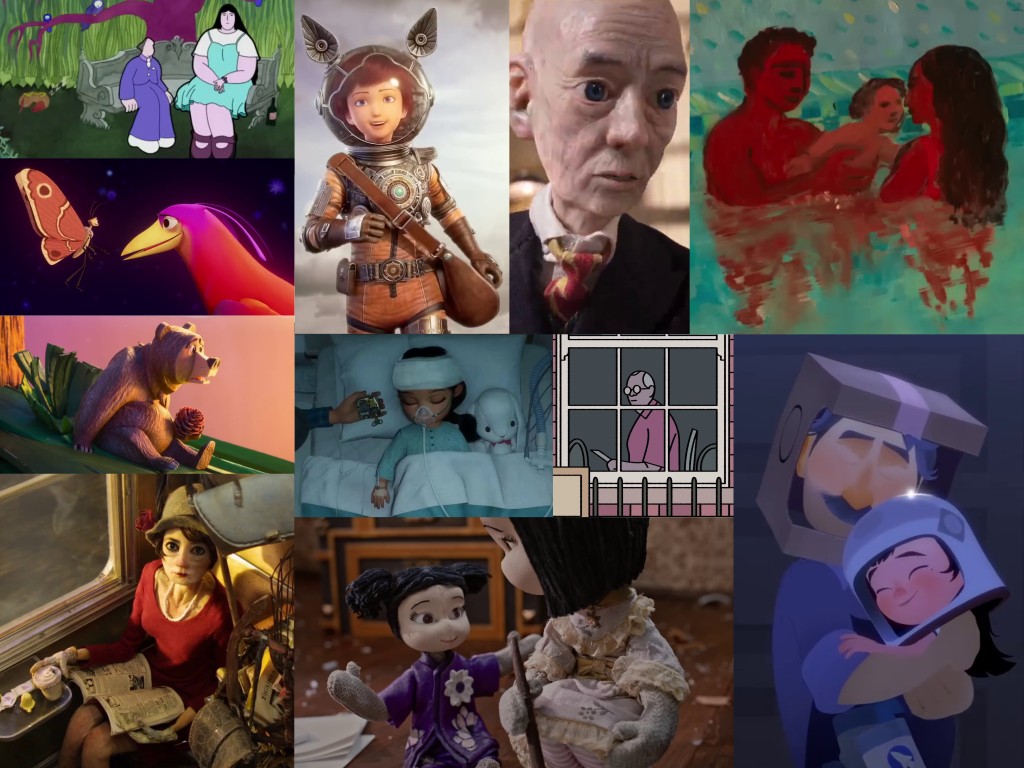
At the beginning of the month, I had tax paperwork to do (a bit of an anachronism, since I finally submitted it all electronically this year), and, feeling some burnout, decided to watch a lot of other people’s animation. I wasn’t exactly sure why I was doing that. I think it really helped me to rediscover the joy in what I was working on; not judge it too harshly; and get over creative blocks.
Also at the beginning of April, NASA’s Artemis II mission went back to the Moon for first time since Apollo 17, over 50 years ago (1972). This was very exciting, although also kind of weird. I have to face that I’ve gotten very jaded and cynical about space exploration, owing largely to so many false starts and political obstruction. It’s actually frustration with a lot of that that was part of the inspiration of Lunatics: there’s plenty of human drama in space exploration and development, though not the kind we normally see in science fiction.
But we finally did go back, and we plan to do more. At least, I think so. The political environment in the USA is incredibly chaotic at present, so it’s a challenge to keep on believing. In any case, I had very strong emotions about it, and wasn’t really getting anything done while it was happening. But fortunately, once the tension was released after splashdown, I found my creativity flowing pretty freely again.
Writing
A Personal Animation Festival
I wrote about the beginning of my exploration of animation, with the 2026 Oscar-Nominated films, and then a number of connections from then. After this article, I also went on to watch a number of historical animated films, and a lot of short student animations.
On Returning to the Moon
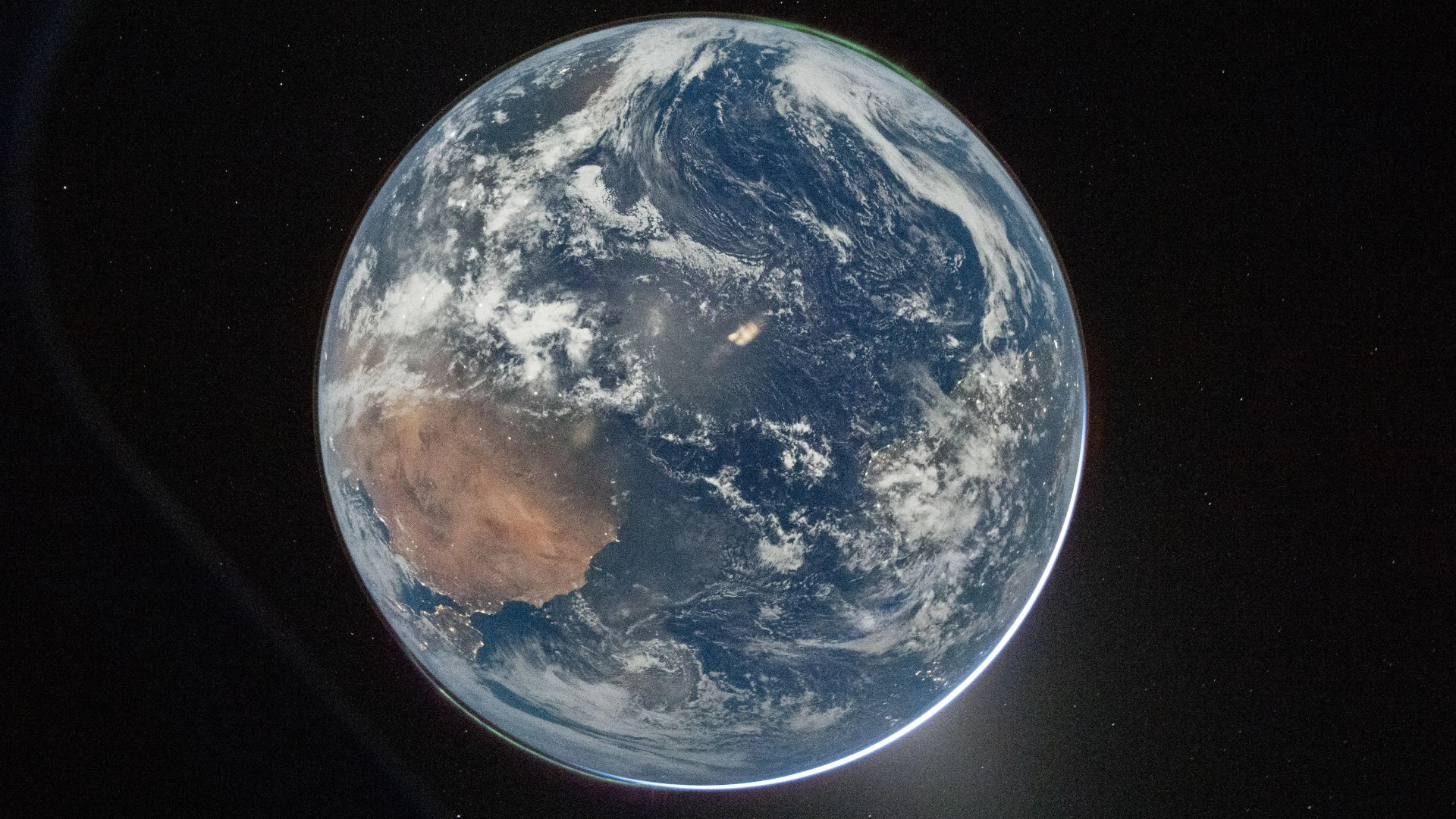
I had to write down some thoughts about my personal reaction to Artemis II going on its flyby of the Earth’s Moon.
Production
SF-1-A “Sunbeam” Shot
One of the more interesting left over from the 2013 Teaser Trailer, shows a sunbeam shining into the spacecraft, right after the shroud is ejected during the launch. This moves across the cabin, as the spacecraft rotates, and the light gets into Georgiana’s eyes, encouraging her to turn away (in the next shot, she sees the Earth appearing in the porthole near here, opposite the Sun). This had a very different character, because of three key differences between the original Teaser Trailer assets and what we have now:
- No faces in the helmets in the Teaser Trailer. We didn’t have the models for those yet, so they’re just reflective.
- Plasticky “Naive 3D” material rendering style (this was my main problem with the shot, since it’s now very inconsistent).
- The sunbeam is a spotlight lamp, which isn’t used elsewhere in the episode.
I wanted to get a similar feeling from this shot, but with an updated NPR3D shading and our current assets. Since I’d never tried using a spotlight with the new style, I wasn’t quite sure what it should really look like. I think I’m pretty happy with the composite I finished in late March as a look-test:
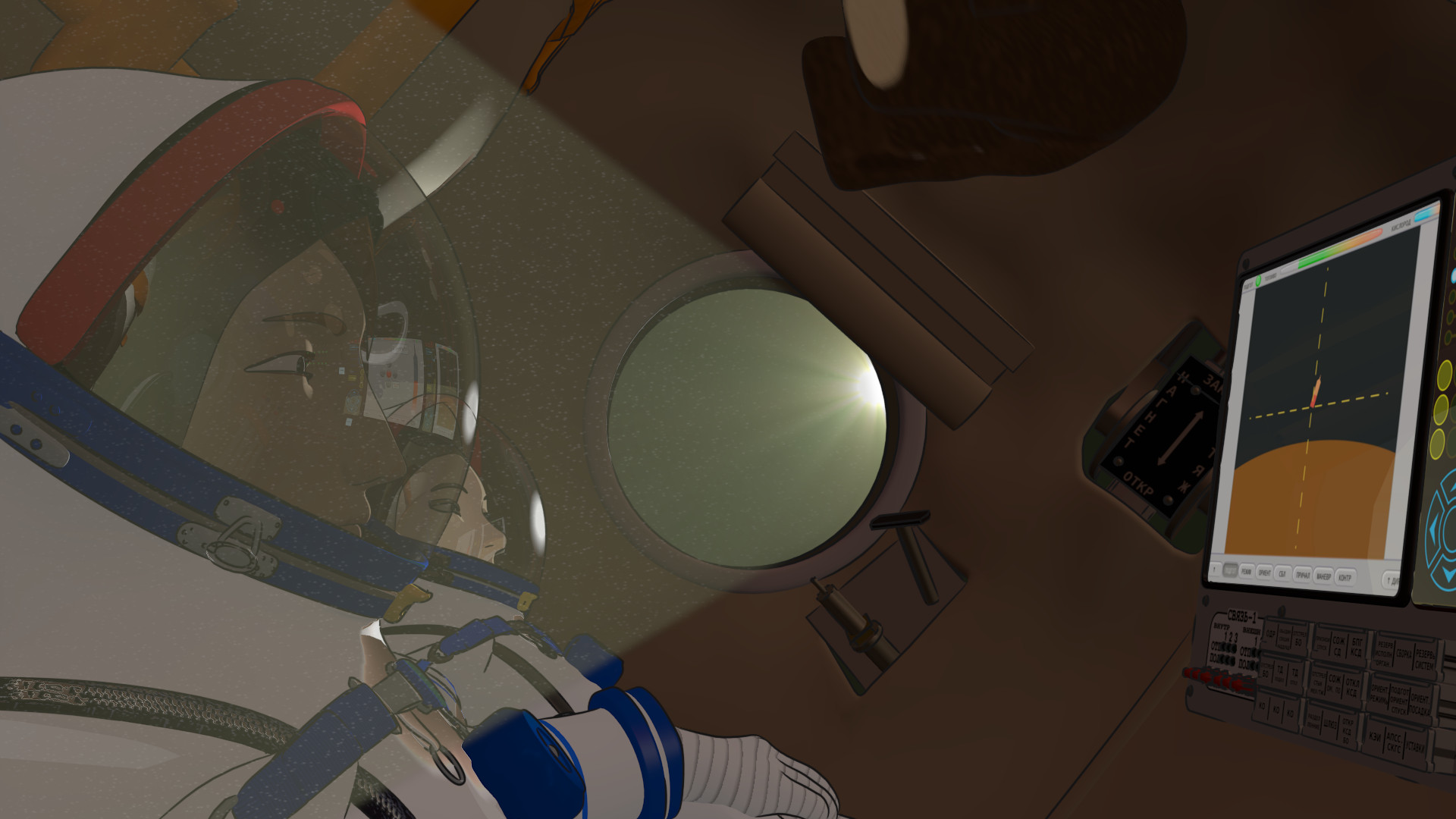
This month, I needed to setup the animation. First, I had to rig and animate the spot lamp and the sunbeam object (now an actual 3D-modeled element), and then I also needed to add “ride animation”, consistent with the rest of the sequence. At the end of April, this appears finished, though I have not yet seen the rendered output or composite (and much of the “look” for sunbeam is to be done in the compositing process, which I also set up.
SF-1-J “Teddy Bear Bounce”
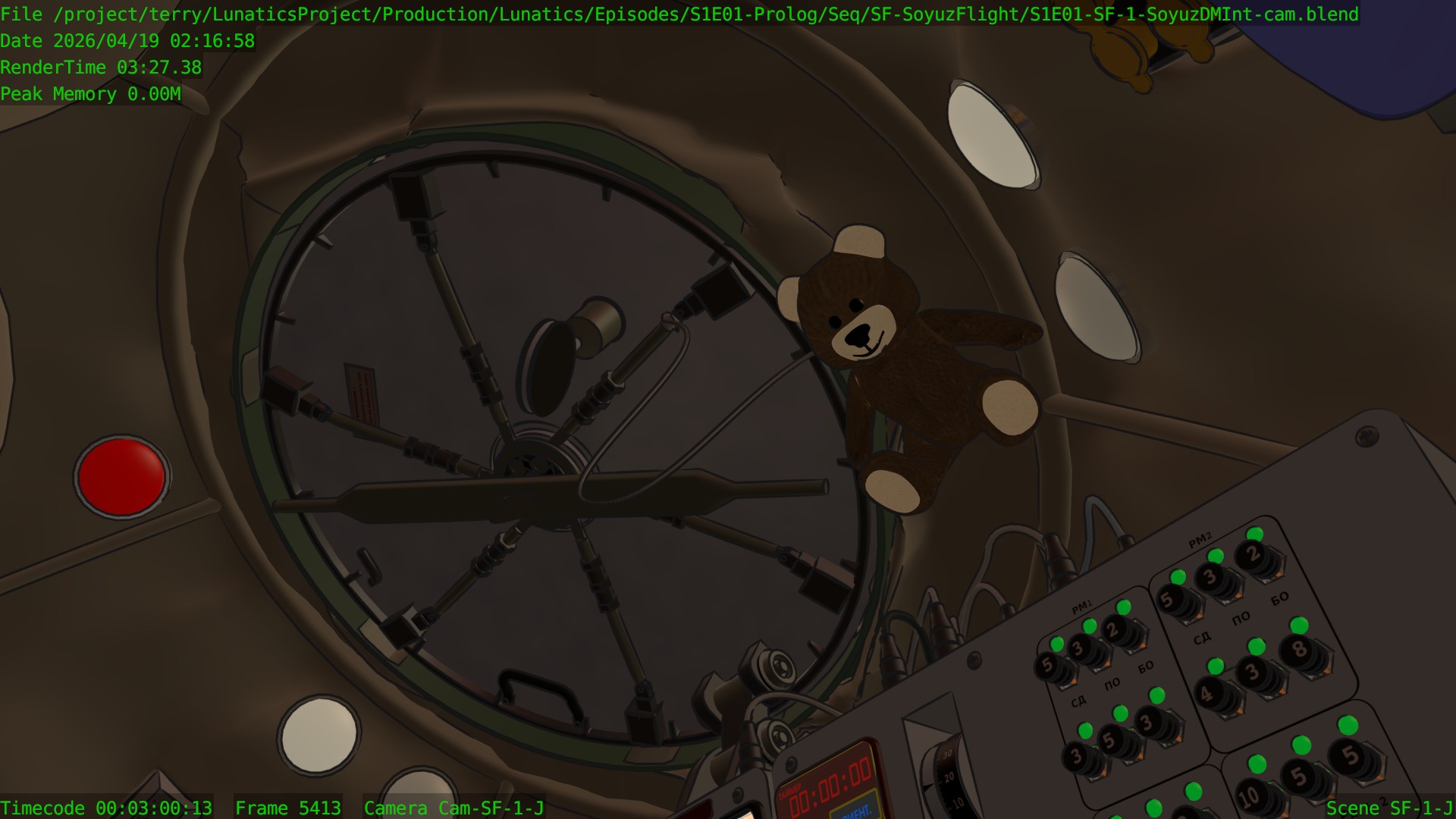
The other leftover from the 2013 Teaser Trailer was a shot of the suspended teddy bear reacting to the engine cutoff and sudden freefall, recoiling and bouncing off of the ceiling. The most noticeable issues were:
- Particle fur on the bear, which we’ve since replaced with a simple texture when we changed to the NPR3D Ink & Paint look.
- Interference problem with the actual bounce (the bear’s arm went through the ceiling slightly).
I also decided that the shot could stand to be a little longer. It was paced to fit with the trailer, but I felt that if the camera lingered on the bear floating inside the cabin a little longer, it would sell the effect better, and also put the bear more in the audience’s mind so that the final dialogue referencing it would work better.
Of course, the shot also acquired a designation “J”, because it previously didn’t have one.
SF-1-G/SF-5-Z “Porthole Pullaway”
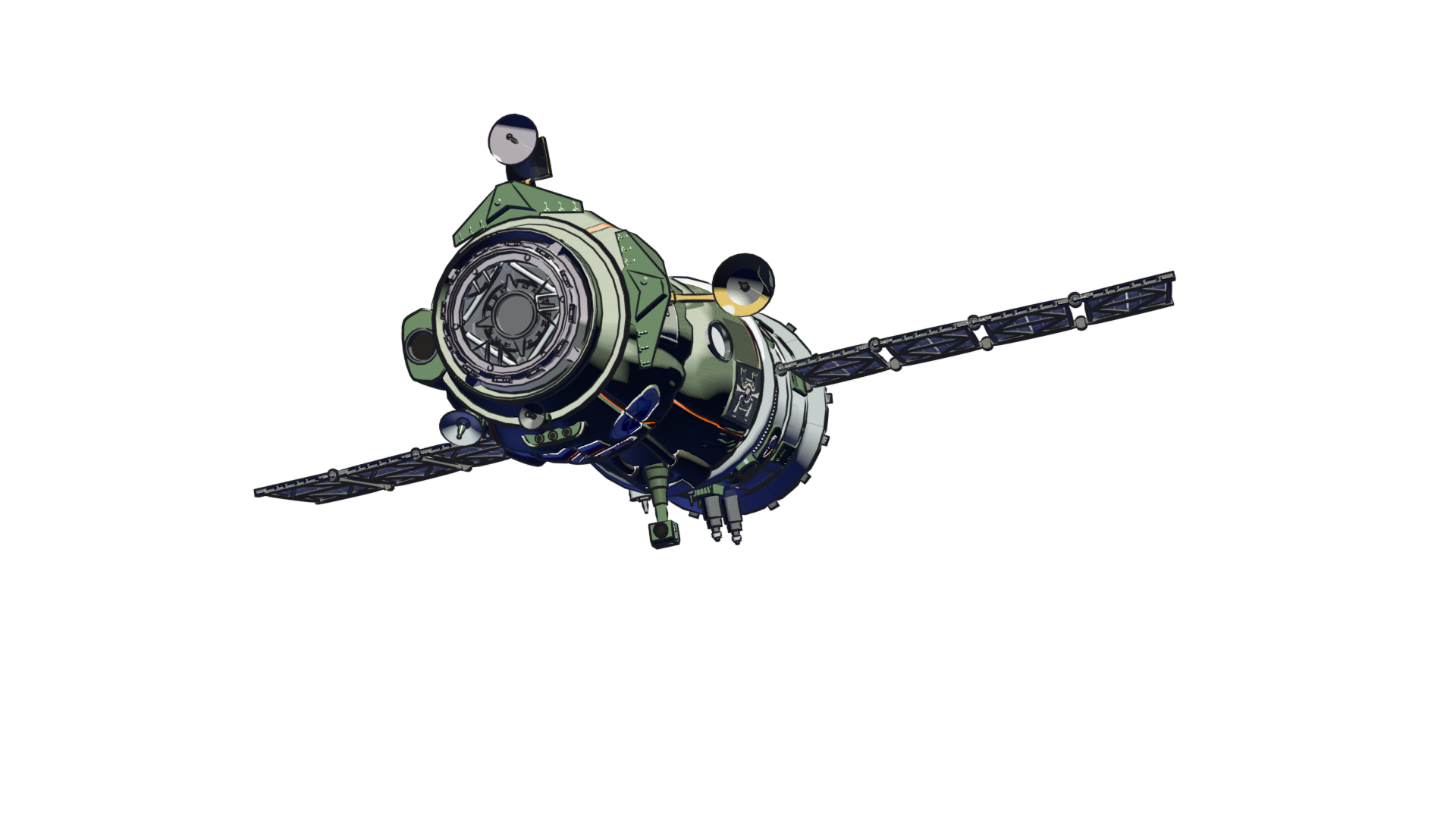
The featured image for this month is from the final pullaway shot, which starts with a view of the characters inside the spacecraft through the porthole, and ends with the orbiter passing out of frame, leading to the main titles. This is a match-move composite, consisting of two shots: SF-1-G is the interior action, in the SF-1 camera file, while SF-5-Z is a transition using the Soyuz orbiter exterior. In order for the camera movement to match between the two shots, I used a single camera rig, which is defined in the SF-5-Z shot, and then shared as “dupligroup” in SF-1-G. Only the first 200 frames or so are needed from SF-1-G, as the porthole turns away from us, and the rest is SF-5-Z.
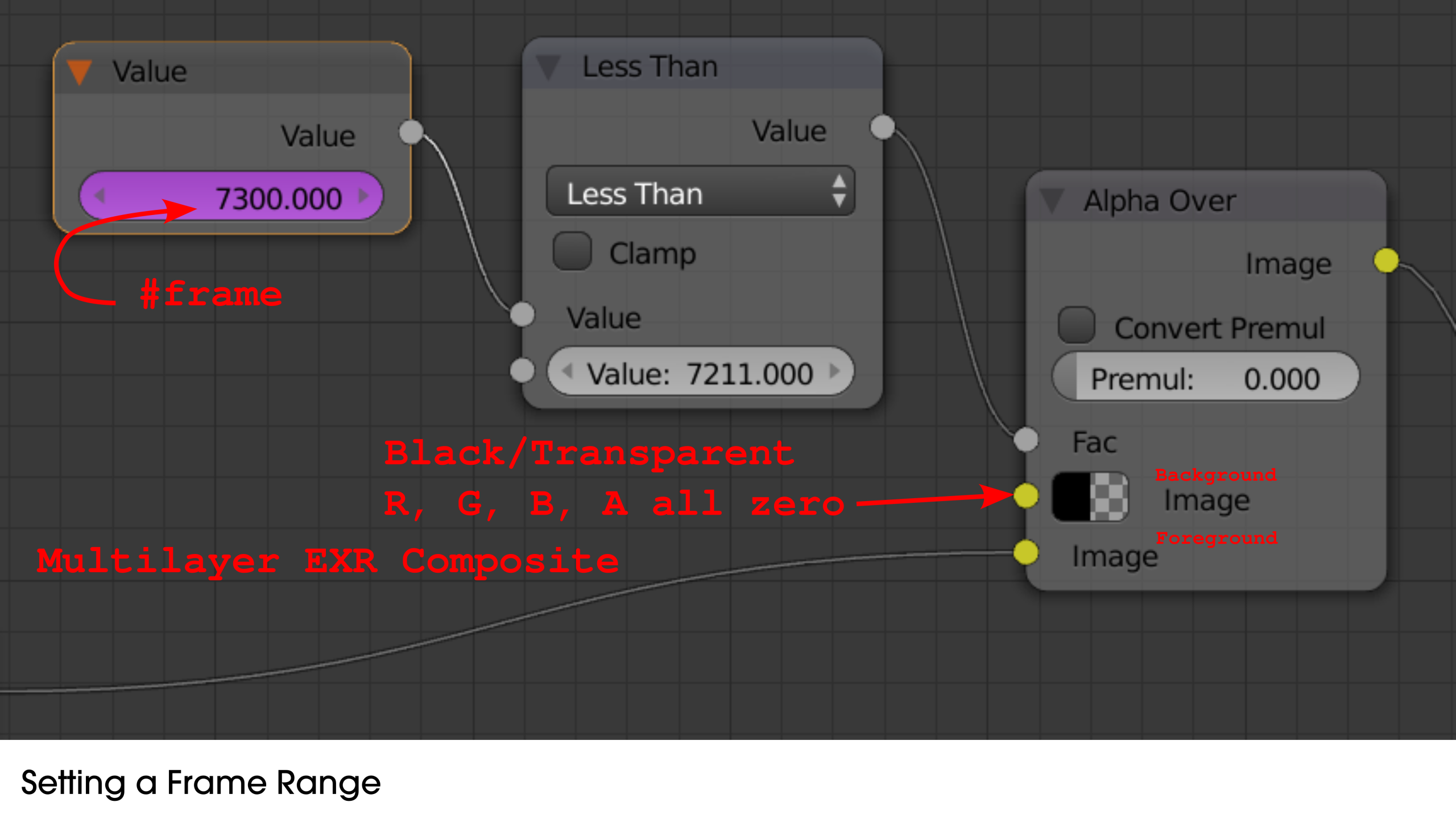
To get the correct composite, I needed to extend SF-1-G with blank frames, but I didn’t want to fill up my hard drive with empty images, so I figured out how to generate these in the Blender node-based compositor. It’s a bit tricky, because the way you can get the current frame number is to use the special value “#frame” in a “Value” node. That’s not terribly intuitive. I think what this technically is is a “driver expression”, especially since it turns purple, which what happens with drivers:
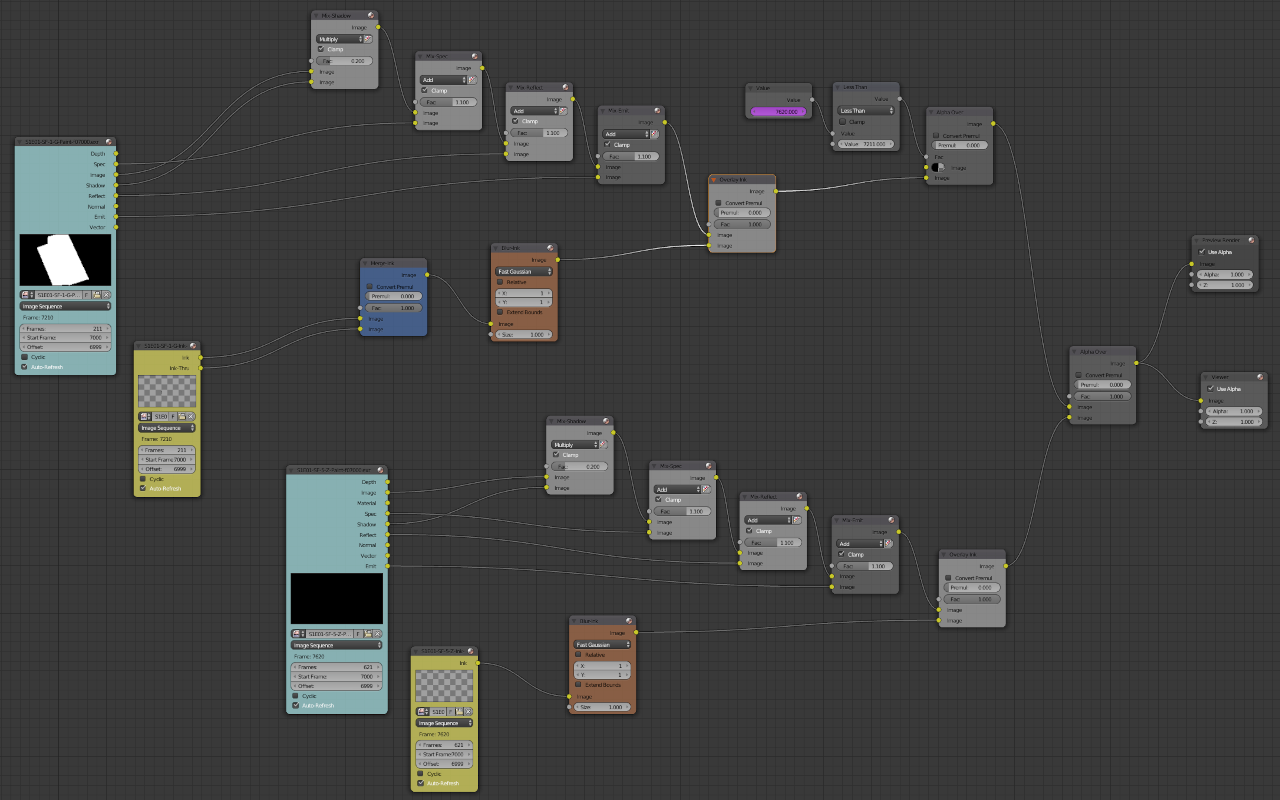
The entire composite node system combines composites of the two different shots, and then combines them:
Test renders of the two parts of the shot:
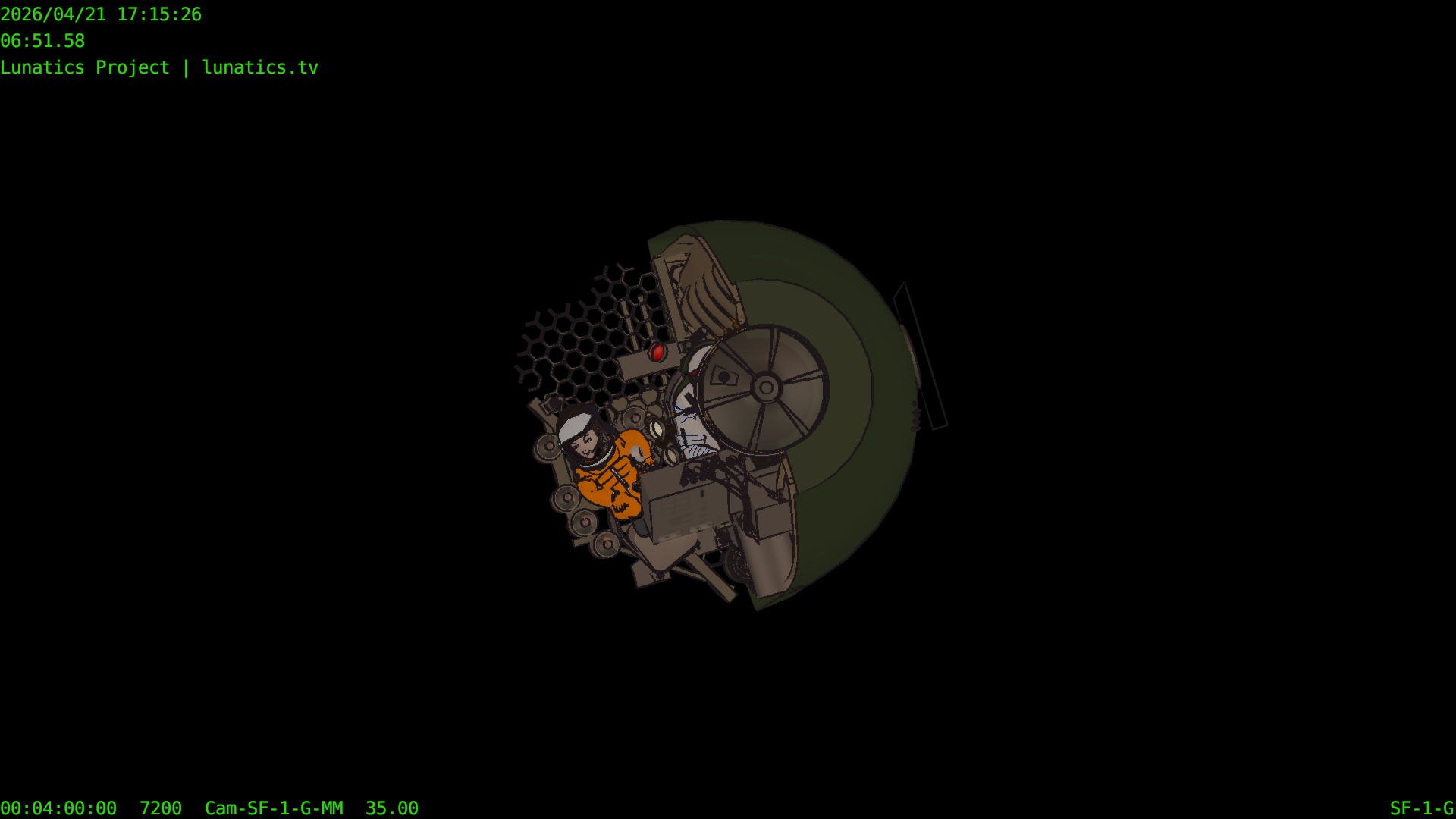
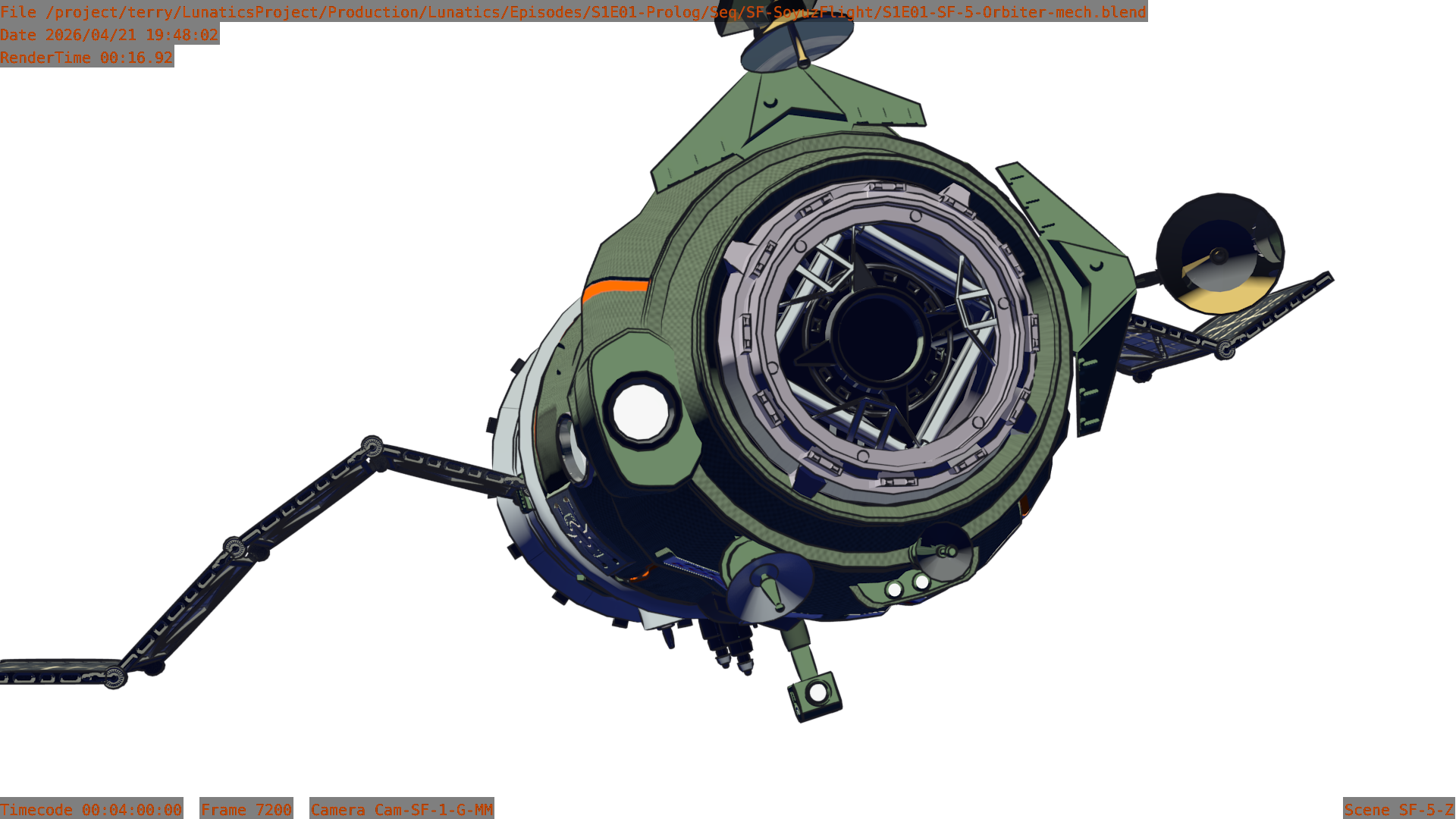
The shot also merges with another, simple shot of the Earth in SF-6-A, but that’s added in the Kdenlive edit, so the exterior shot is transparent, rather than black. This allows the Earth limb background in SF-6-A to be used, which is also the transition to the main title sequence (which is at the end of this episode).
The completed composites:
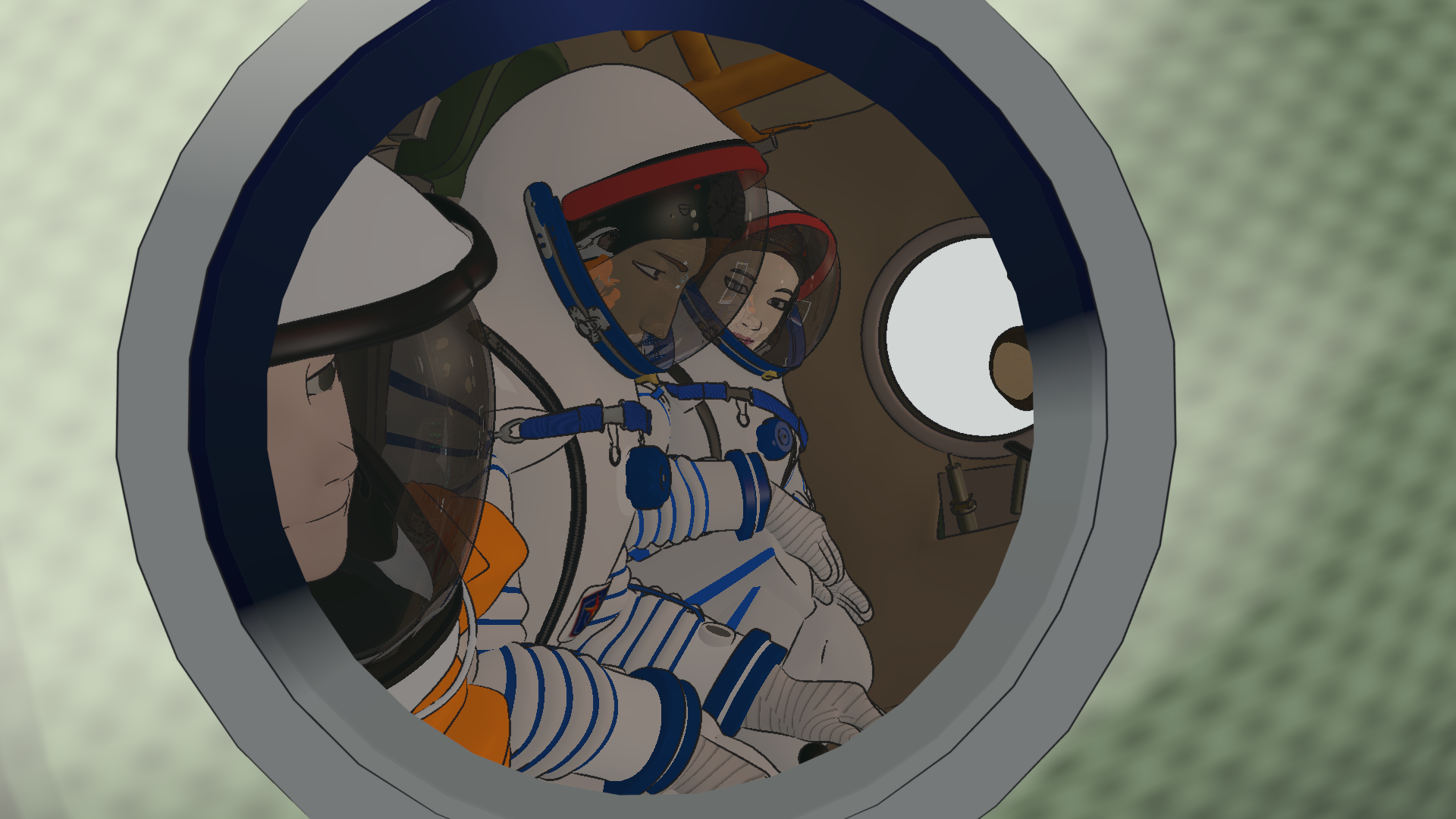
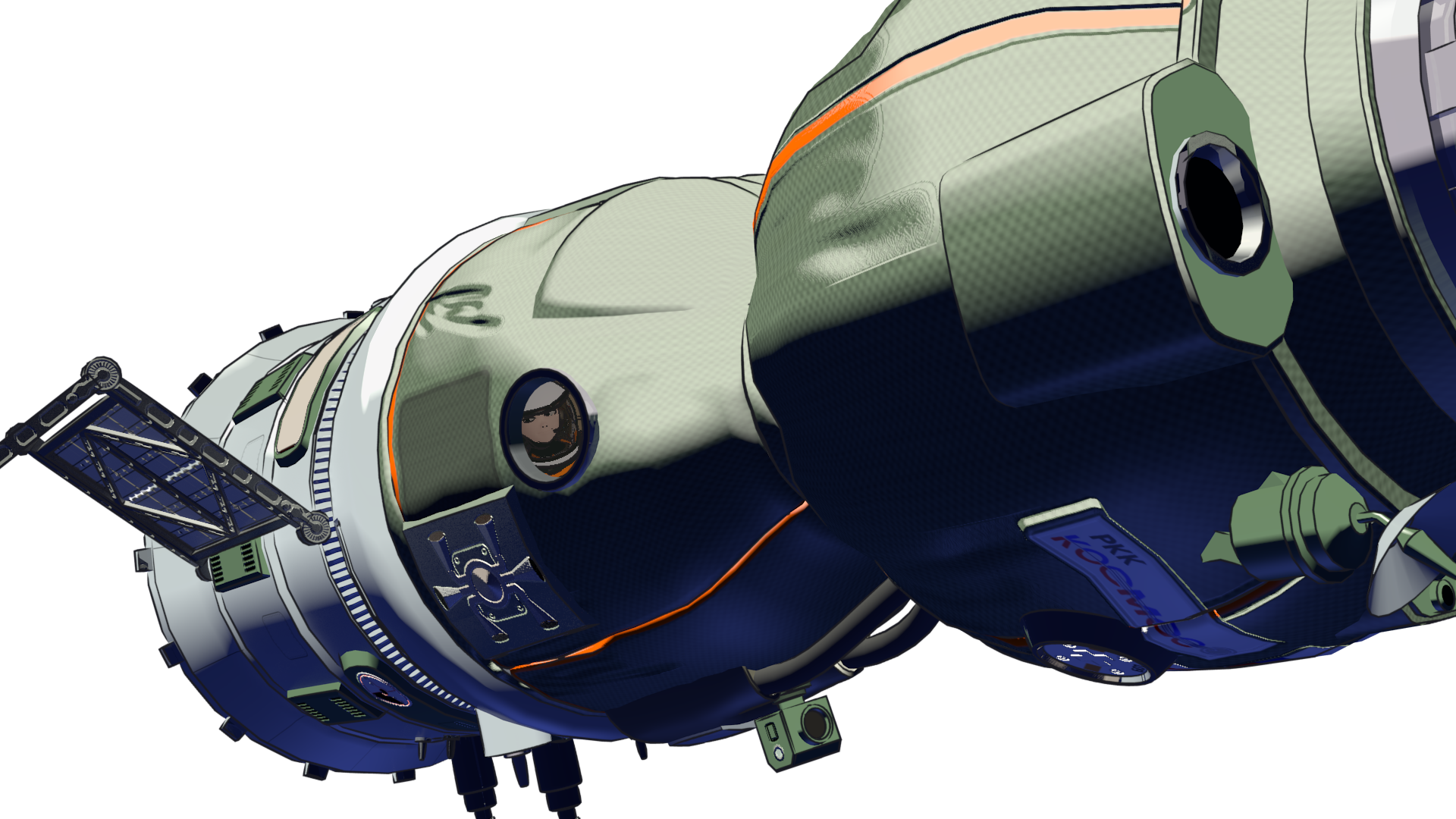
Miscellaneous Projects
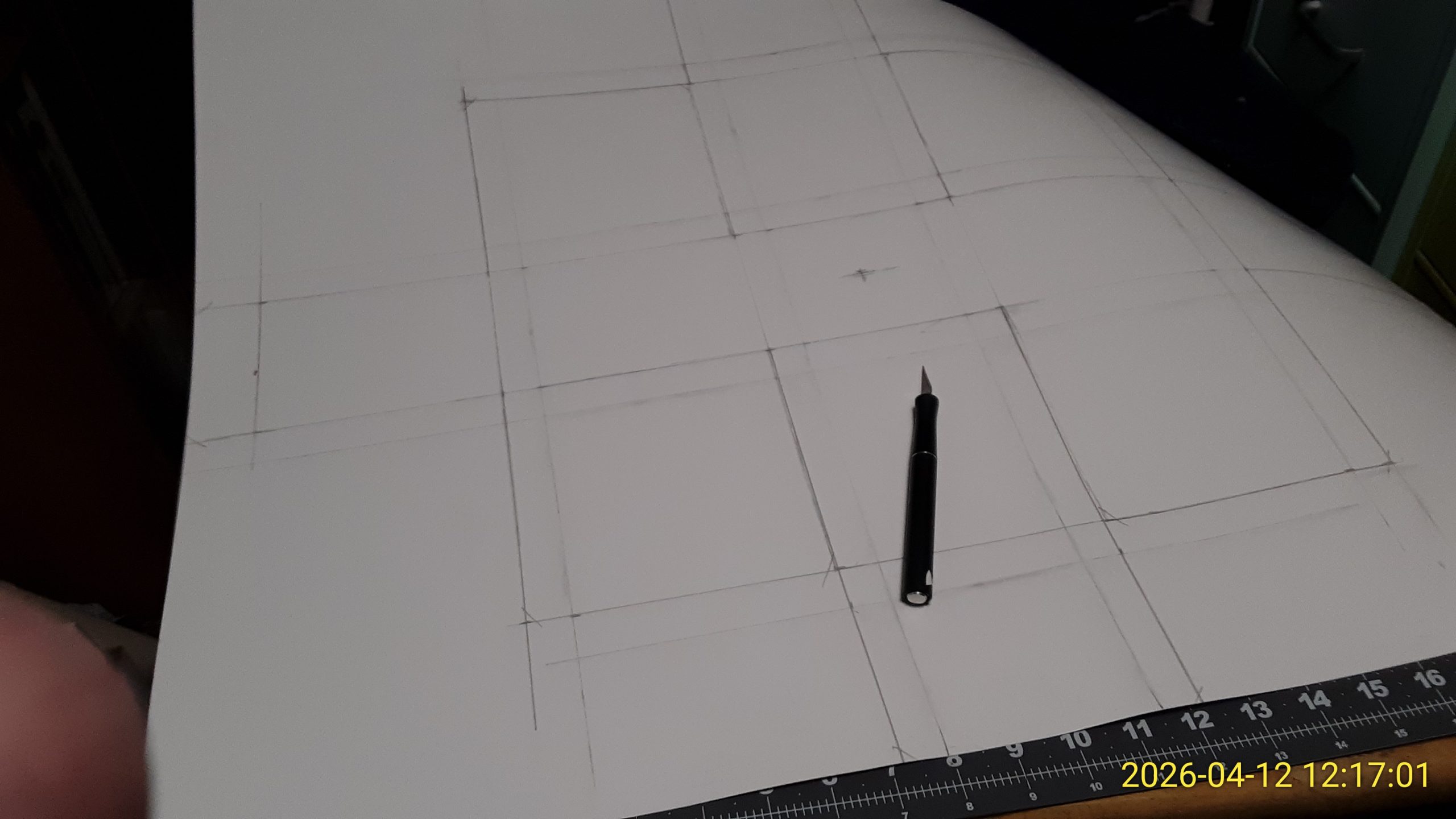
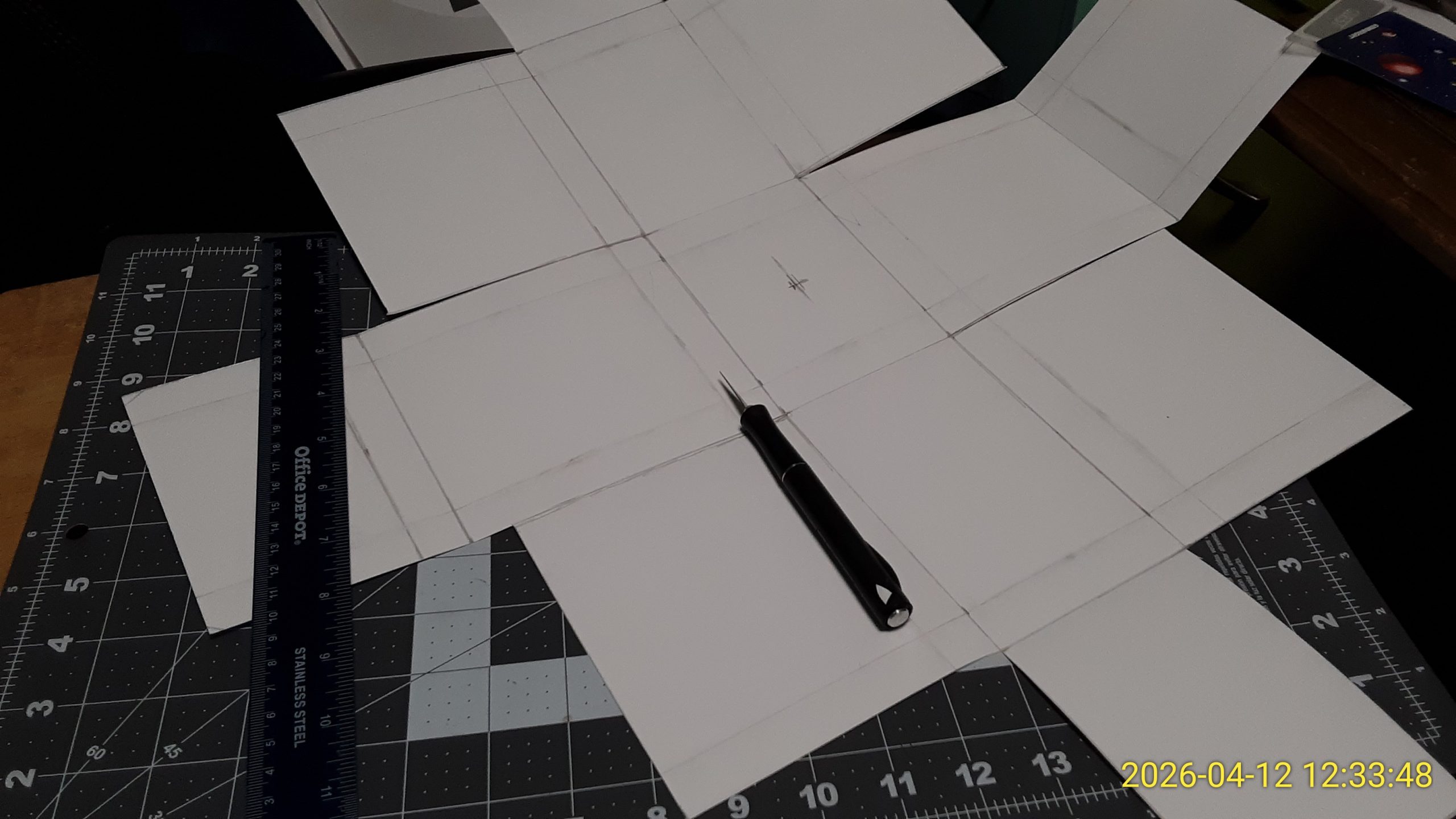
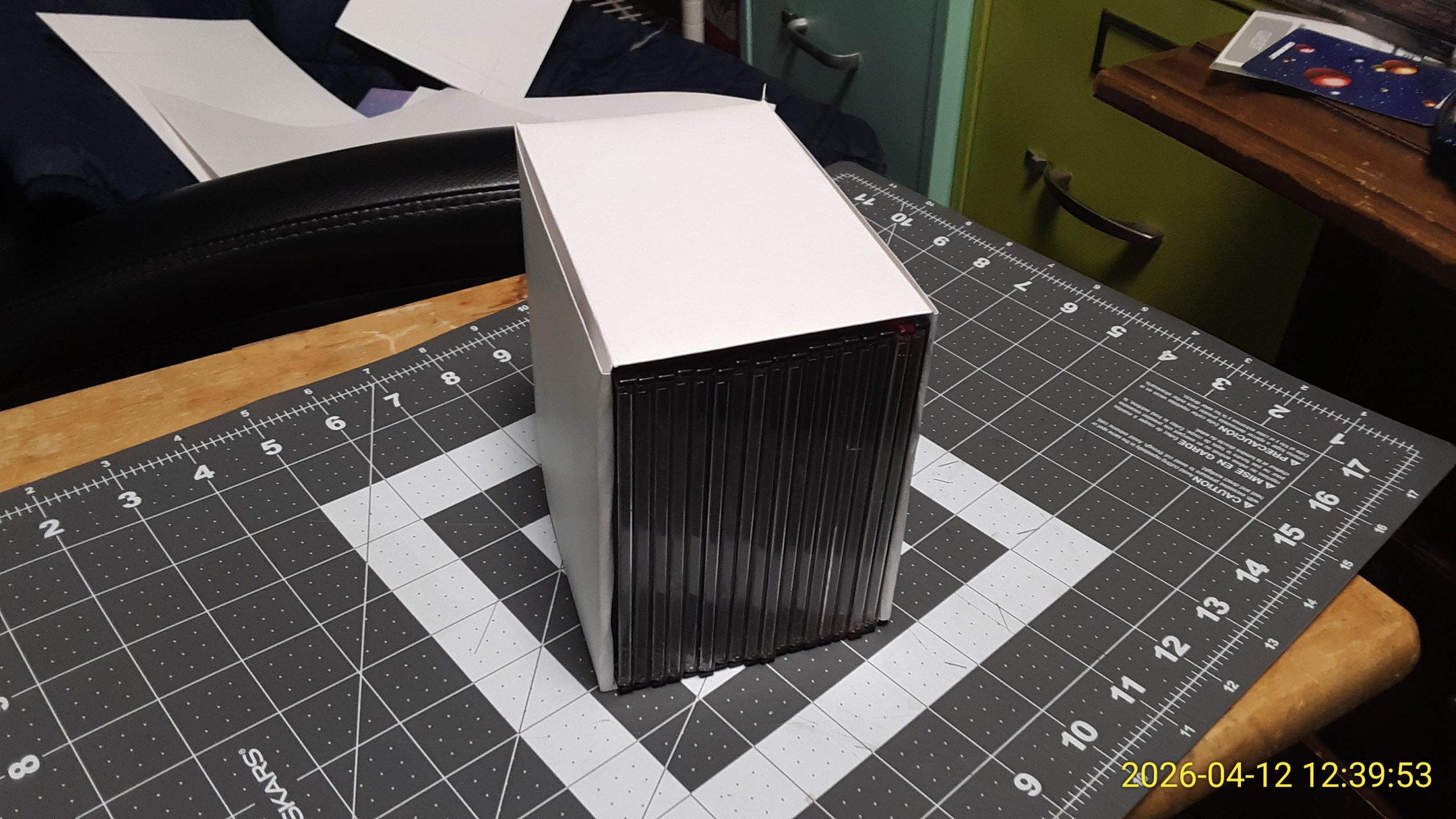
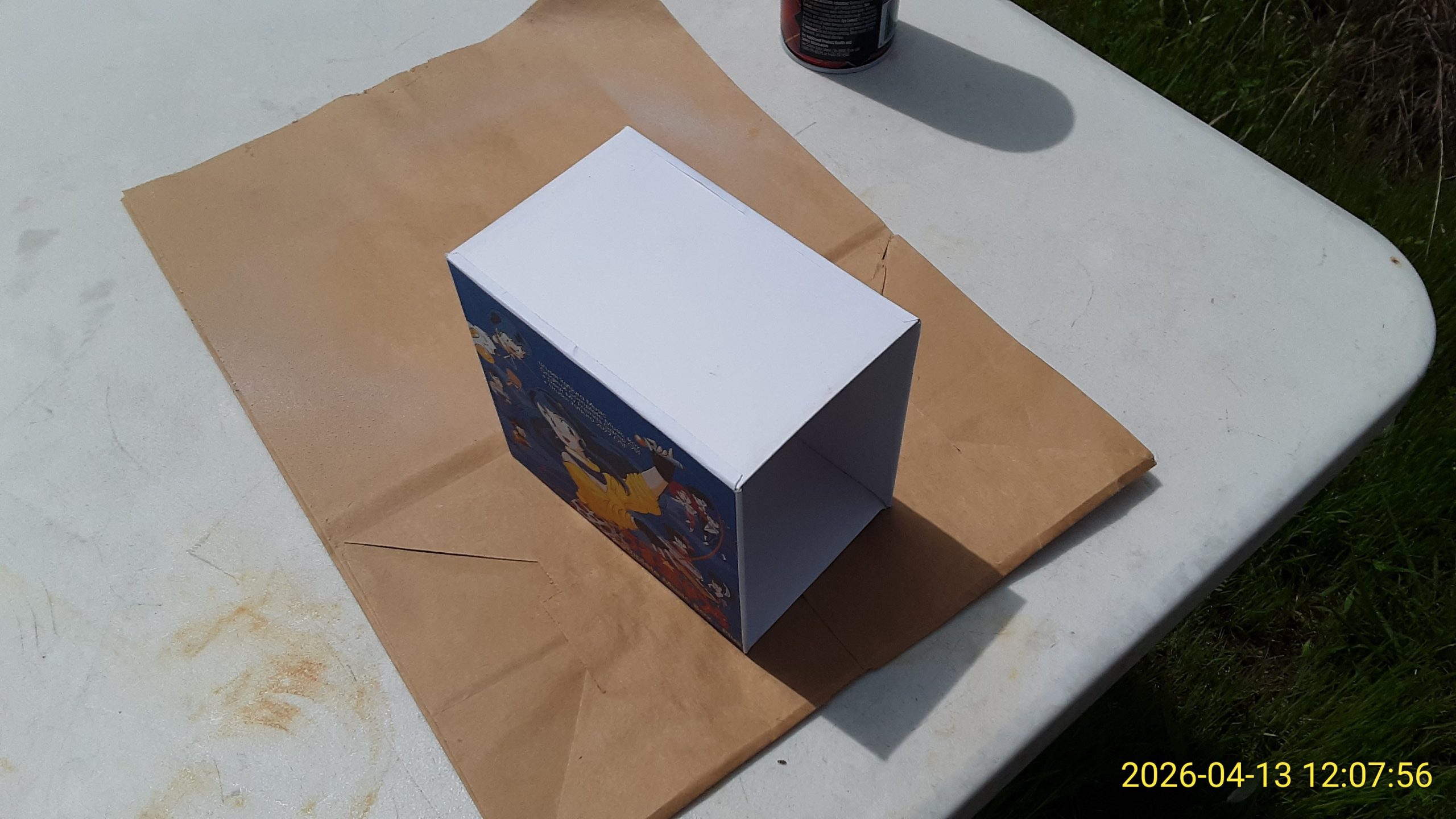
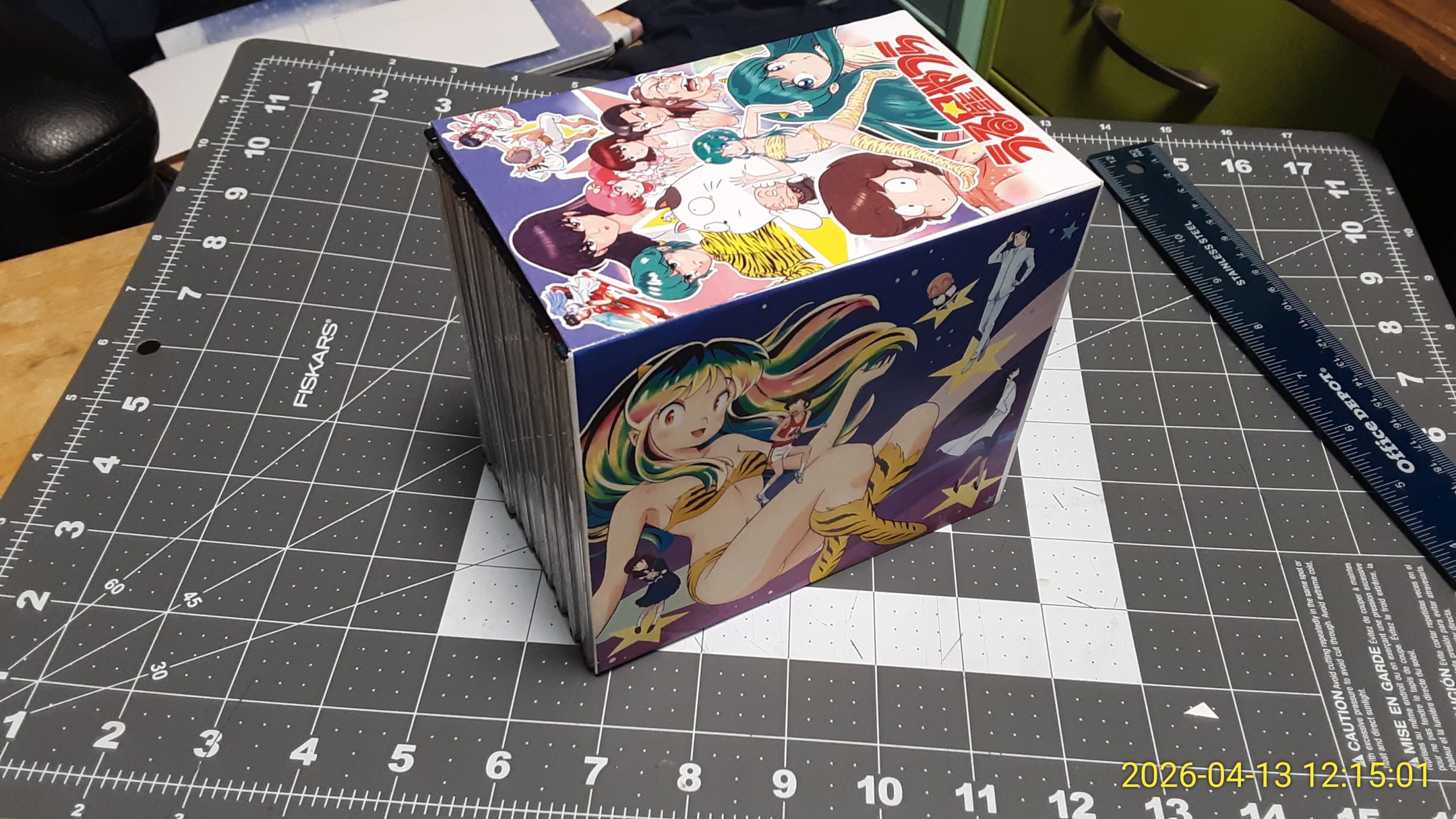
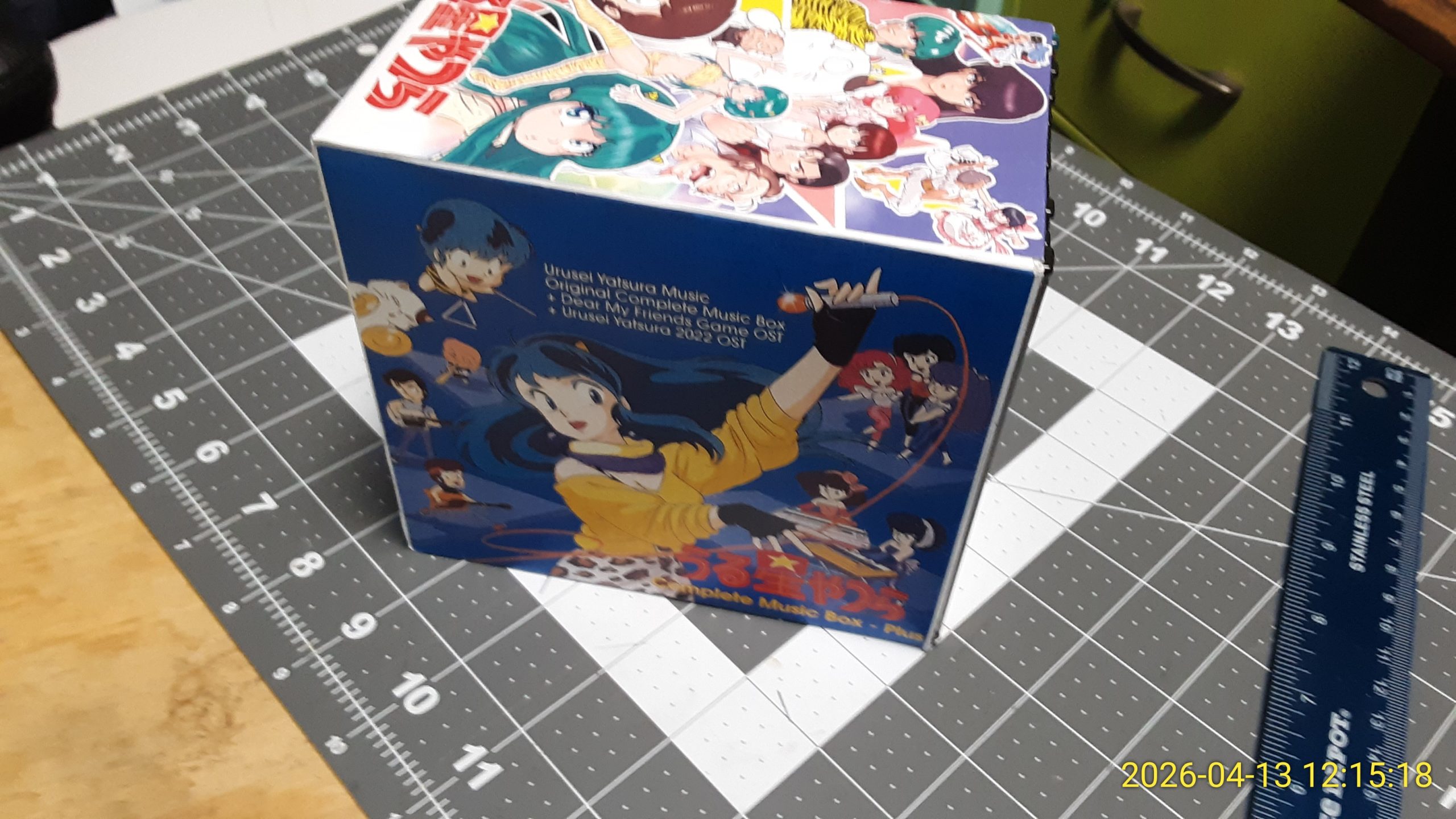
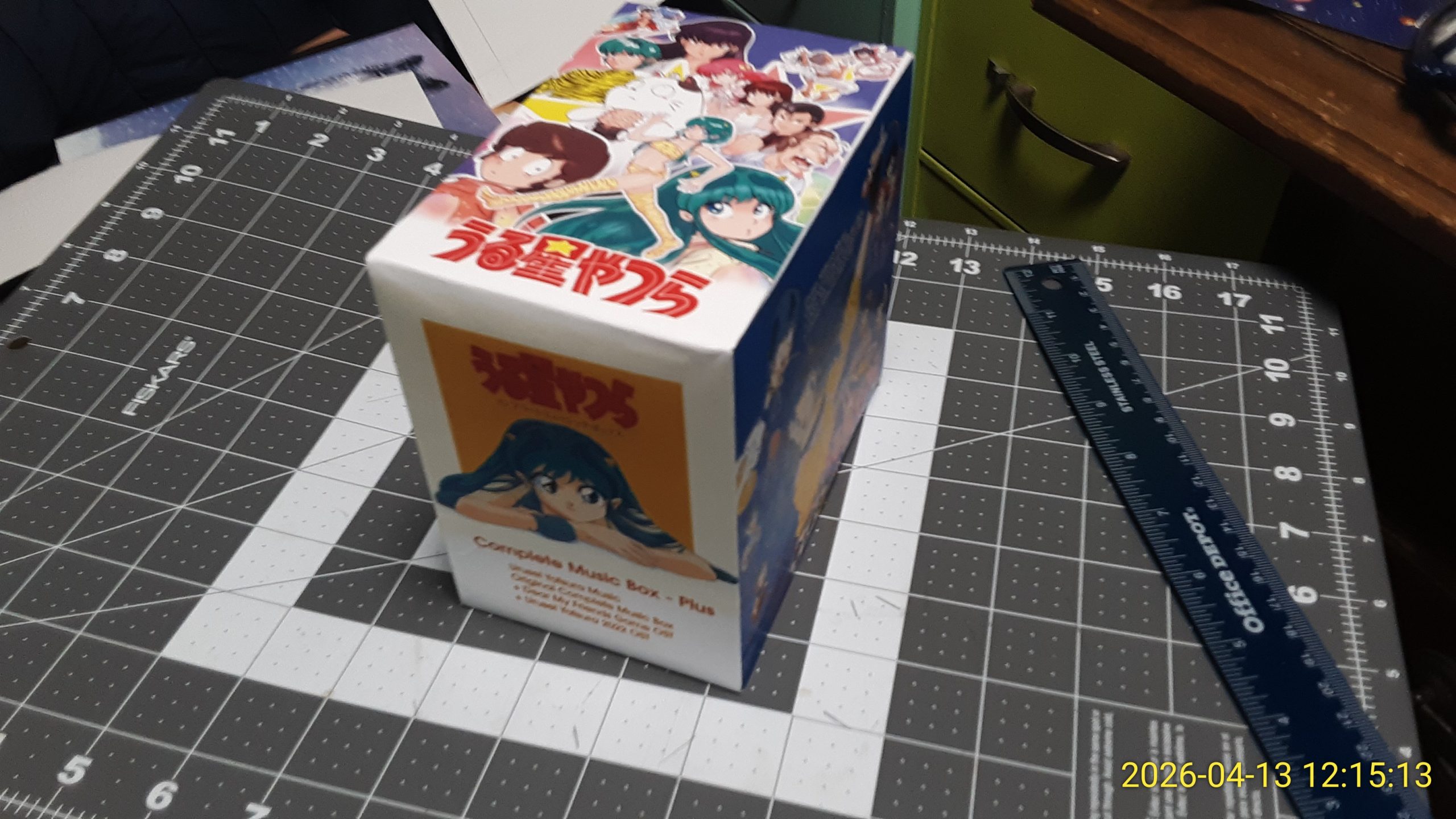
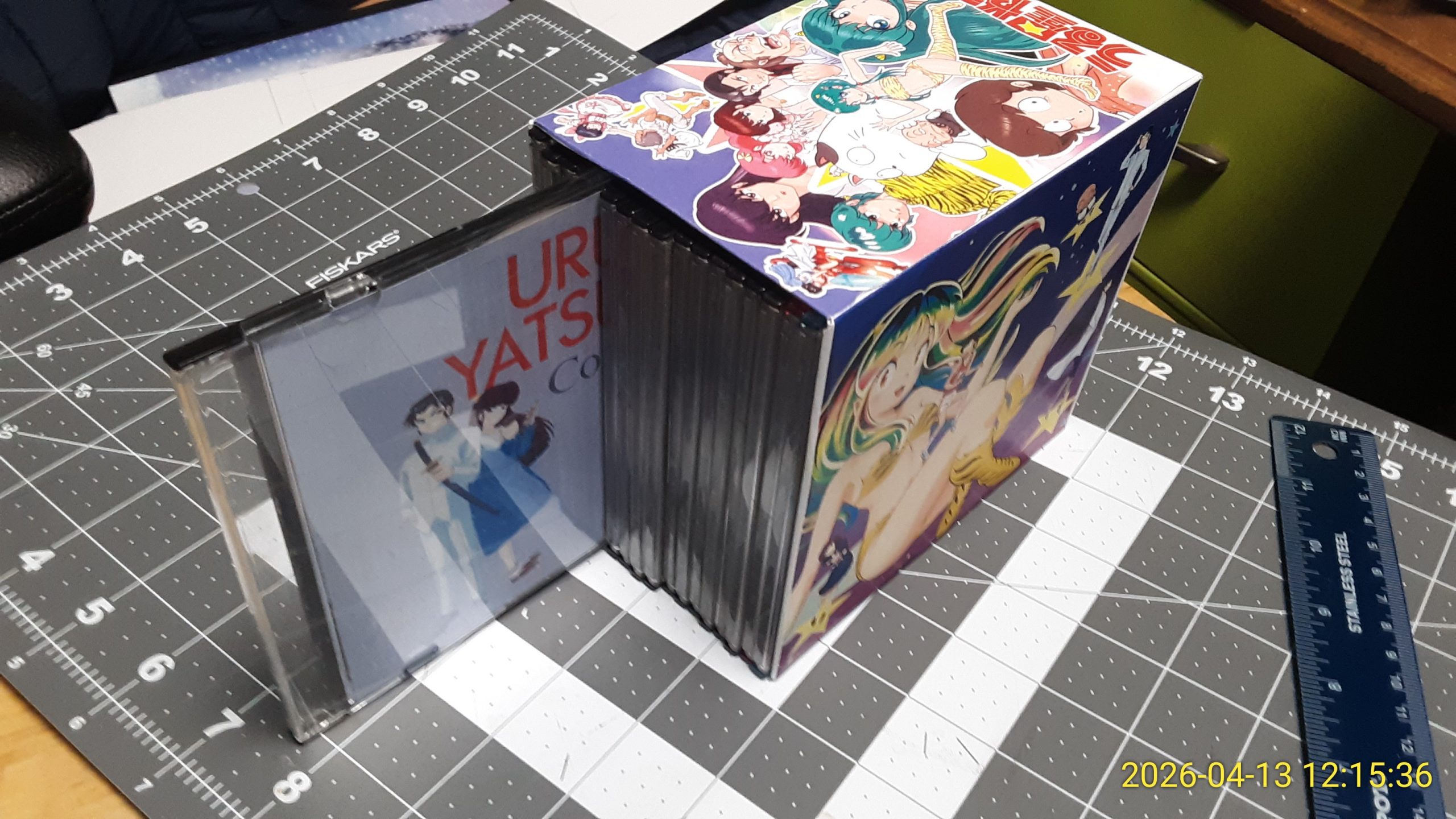
It’s not at all related to “Lunatics!”, but I needed a shelf box for a collection of soundtrack CDs that I have, and I figured out how to make it from posterboard. This was my first experience using spray-on adhesive, which I got mainly to attach the printed cover art to the box. But it’s also good for joining the posterboard to itself.
 |
 |
 |
 |
 |
 |
 |
 |
 |
|||
That was definitely a fun craft and learning project. I will definitely not be making anything for sale this way. It’s too time-consuming. But it was perfect for making a prototype.
I also came across an interesting bit of Japanese this week. I had to go look up all the kanji from a watermark, so I feel like it’s a good thing to write it down here for later reference:
AI????
“AI gakush? kinshi”
It means “AI Training Prohibited”. I was a little worried that it might mean the image was AI generated, but it’s kind of the opposite!
April 2026 Production Timelapse
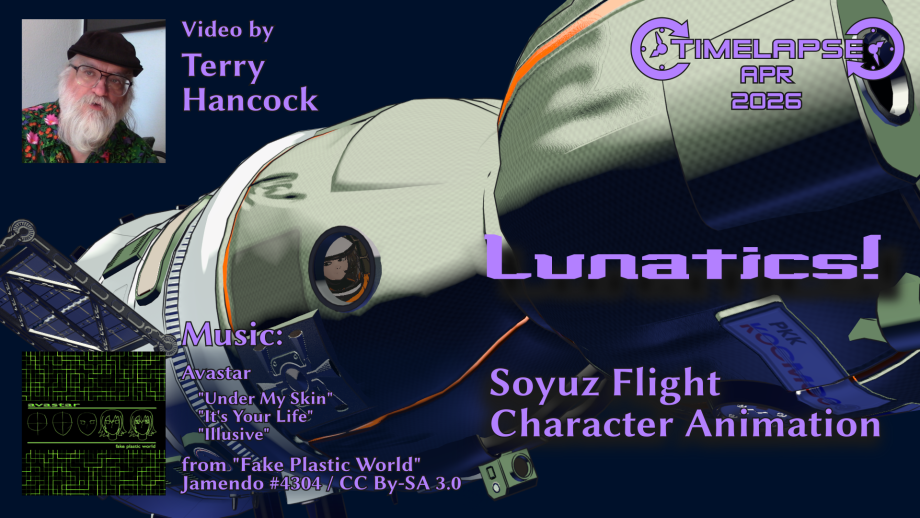
This month’s timelapse follows the work on the animation for the Soyuz Flight sequence.
Video Logs
Video Log 2026-04-11: Time Out for the Moon
Video Log 2026-04-19: Animation and Animation
Video Log 2026-04-30: Soyuz Ride Animation
 Share this post on social media.